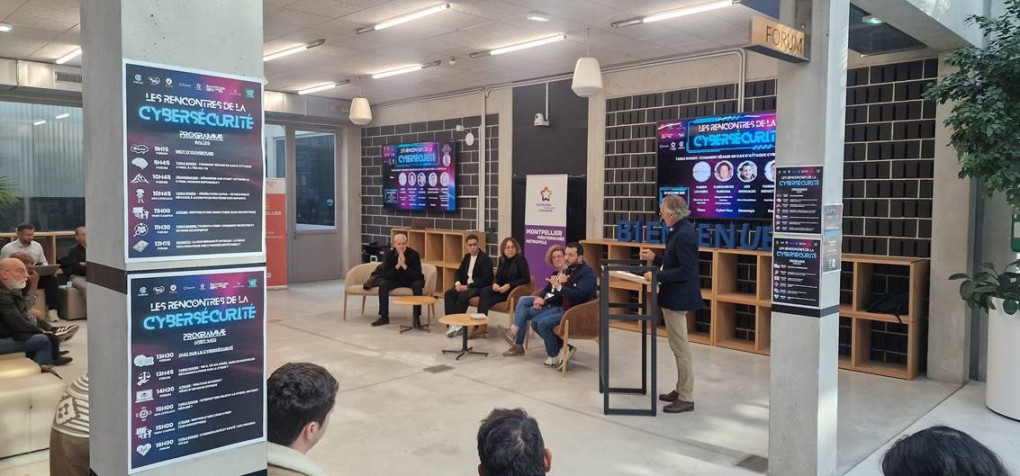
“AI is transforming cybercrime from a small-scale operation into an organized crime industry. It is getting faster and nastier. But the good news on the defensive side is that AI also means more effective tools can be created. So, let's be proactive!” Séverine Denys, Director of Institutional and Regulatory Affairs at Docaposte, summarizes the key message conveyed to businesses by speakers at the 2nd Cybersecurity Meetings.
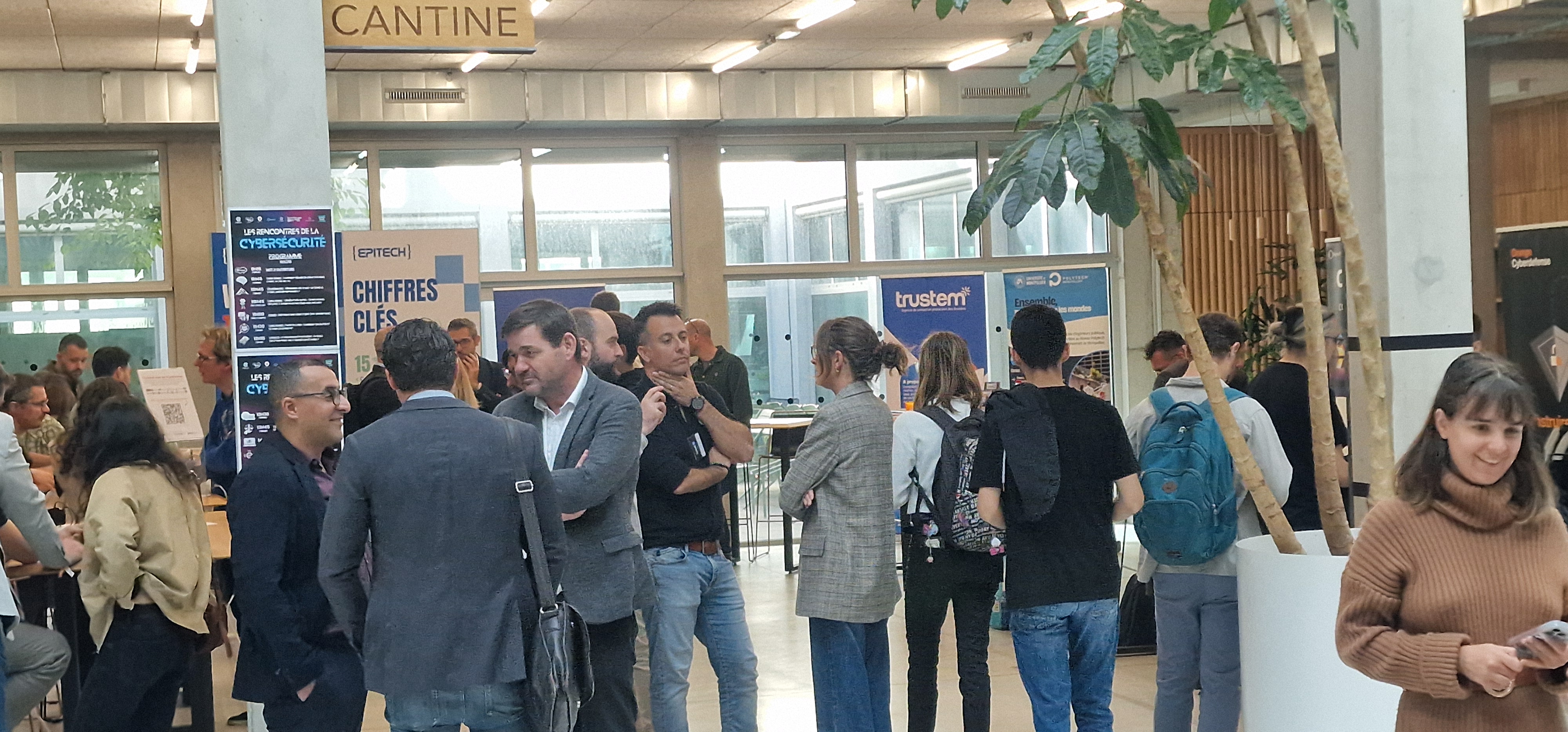
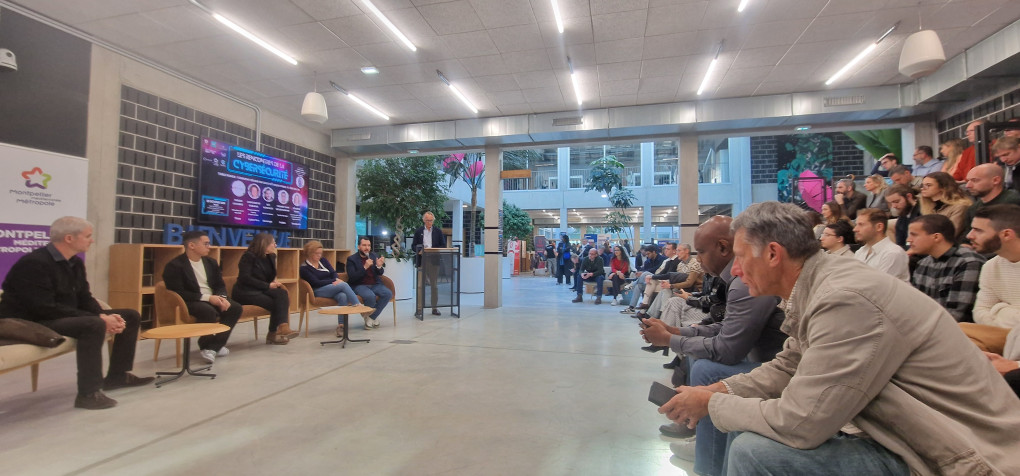
Held on October 28 at the Halle de l’Innovation, in Montpellier’s Cambacérès business district, this event for digital players, local authorities, businesses, students, and the general public was a huge success. The topics discussed were extremely current. “How should we react to cyberattacks in the age of AI?”, “Is it impossible to launch a startup in the cyber sector?”, “Is physical sovereignty the only solution for reliable cybersecurity?”, “Is cyber security an overlooked aspect of the Internet of Things?” These are just some of the questions that came up during the event.
This second edition of the Cybersecurity Meetings was also held over an entire day for the first time, following the success of the first edition in 2024. The emergence of AI has dramatically changed the landscape, making attacks more frequent and more difficult to detect. This led the French Ministry of the Interior to point out in its 2025 report on the subject that cybercrime has become “industrialized.”
“Cyberattacks are increasing,” confirmed Stéphanie Andrieu, elected representative at the Hérault Chamber of Commerce and Industry (CCI) in charge of digital technology. “In France, 54% of all companies are attacked, and 43% of these are SMEs and mid-sized companies. On average, an attack costs the targeted entity about €128,000. Unfortunately, only one in seven companies is prepared to deal with such an attack. That’s not very many!” What's worse, two out of three companies do not recover from a large-scale attack.
In this context, the invited experts sought throughout their presentations to raise awareness as widely as possible and encourage companies to implement appropriate tools.
Securing information systems and workstations, implementing cyber-based solutions, raising awareness among teams and improving their skills, backing up data with redundancy... These points are just the beginning. It is also critical to focus on sovereign solutions that are governed by European regulations and provide protection. It is also essential to mobilize the right skills.
Fortunately the Montpellier area benefits from a comprehensive cyber ecosystem and a wealth of expertise. Several rising stars in the sector spoke at the event, including, Devensys and Pradeo, Tixeo, R2Devops, Askeal, Kopsi Agency, IMS Networks, and Numalis, as well as Acelys. They were joined by Docaposte, AI Stroke, CartoInsight, ConsultIl, Dell, Flint, Orange Cyberdéfense, SI Cloud, Synox, Trustem, ANSSI, Cyber’Occ and others.
“Occitanie is the French region with the highest number of cybersecurity companies after the Île-de-France Paris region,” said Caroline de Rubiana, operations manager at the regional cybersecurity center.
Among the most common types of attacks are phishing (73%), exploitation of vulnerabilities (53%), and “CEO fraud” (38%). When a company falls victim to an attack, it must report the incident to the authorities and quickly contact Cyber'Occ and the 17Cyber platform.
To avoid ending up in this situation, companies must secure their digital access and seek expert assistance when necessary. The Hérault Chamber of Commerce and Industry (CCI) organizes personalized assistance through the MonAideCyber program.
But, even after doing so, companies must also take care to lock down the devices they use and, crucially, continue to implement best practices, particularly by carrying out crisis management exercises.
“We must not be afraid to replicate cyberattack exercises, just as we do with fire drills,” insisted Léo Gonzales, CEO of Devensys. “Crisis management is the key,” added Fabien Lavabre, security director at Tixeo. Rémy Daudigny, ANSSI’s digital security delegate for Occitanie, also encouraged “all entities to test their crisis management capabilities.”
Fortunately, AI is also there to help companies.
"We can detect attacks more quickly thanks to AI," observed Yassine Taha Moustahsane, service manager at Pradeo.
Also thanks to AI, cybersecurity now has more effective tools at its disposal. All companies need to do is prepare themselves by implementing them.
Photos ©Montpellier Méditerranée Métropole